
Cardiology.
Cardiology consultations at Excelsia, based at Earlwood. Assessment and management of heart-related concerns, from chest pain and palpitations through hypertension, heart failure and rhythm disorders. GP referral required for the Medicare rebate.
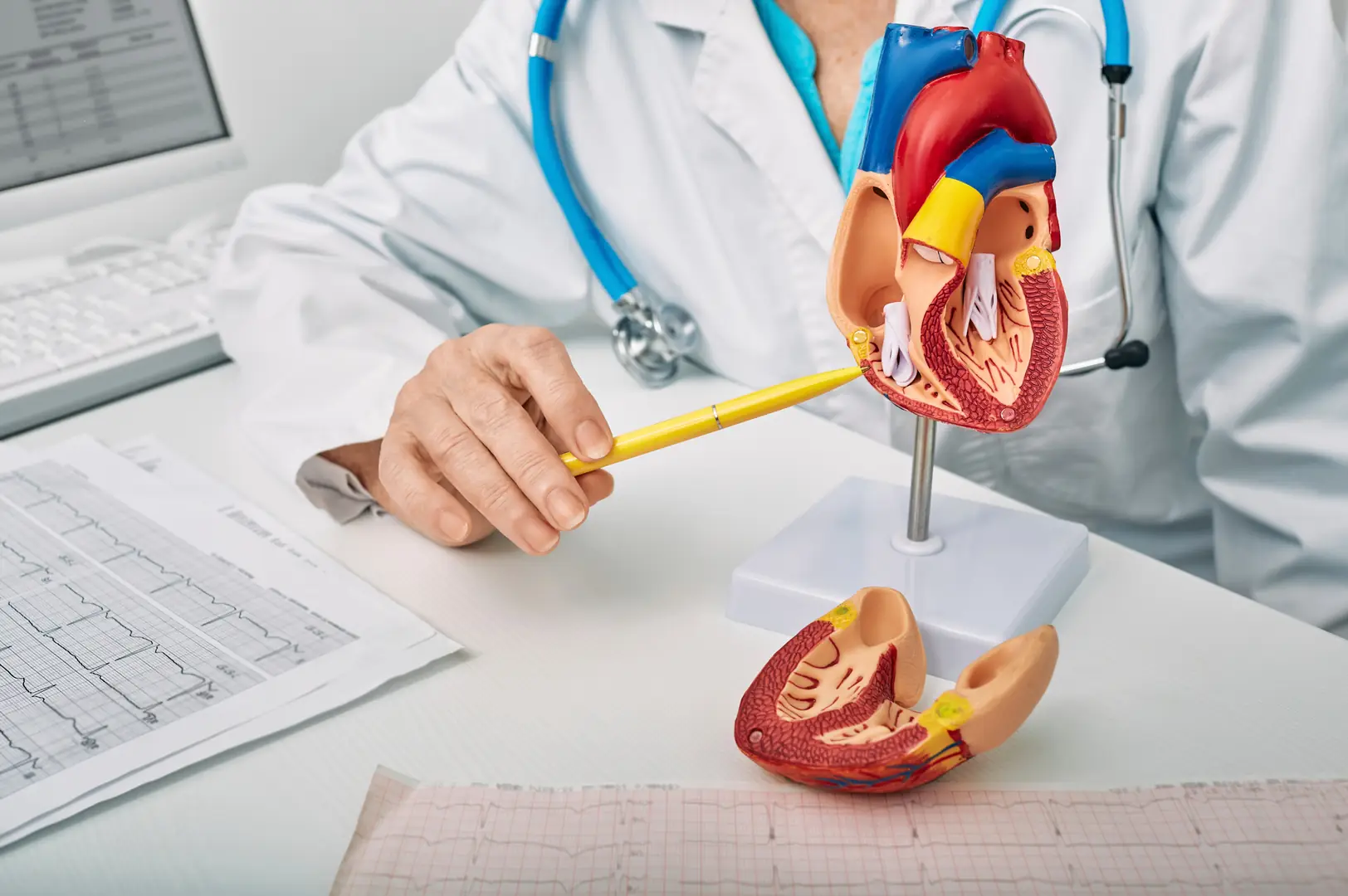
Heart and blood vessel care.
Cardiology is the medical specialty focused on the heart and blood vessels. Cardiologists assess and manage a wide range of conditions, from common concerns like high blood pressure and elevated cholesterol through to complex heart failure, arrhythmias, valve disease and coronary artery disease.
For most patients, cardiology involvement is coordinated with your GP. Your GP identifies a concern (an abnormal ECG, chest pain, palpitations, high blood pressure not responding to first-line treatment, a family history that warrants review), prepares a referral, and continues to be your primary point of contact for general care while the specialist advises on the cardiac question.
Common reasons GPs refer.

History, exam, a plan.
Not every consultation ends with a change in treatment. Sometimes reassurance and monitoring is the appropriate outcome.
Bring your GP referral, any recent test results (bloods, ECG, echocardiogram, imaging), a list of your current medications and any relevant family history. The consultation involves:
- A detailed history of your symptoms and cardiovascular risk factors.
- A clinical examination.
- Review of any tests you've already had.
- A plan that may include further investigation, medication adjustment, referral for procedures where relevant, and follow-up review.
- For new patients, we book a 30-minute ECG in the treatment room an hour before your first consultation with the cardiologist. The consultation itself is scheduled alongside a sonographer, so any further tests the cardiologist recommends after your assessment can typically be arranged the same day.
At Earlwood.
The Excelsia cardiologist.
Cardiology at Excelsia is a consultative, non-interventional service — assessment, advanced diagnostics and ongoing medical management, close to home. Dr Jennifer Law is a non-interventional cardiologist with particular expertise in echocardiography, including transoesophageal echo (TOE). She assesses and manages conditions such as chest pain, palpitations, heart failure, hypertension and arrhythmia, drawing on ECG, echocardiography and stress testing on site. Where a patient needs an interventional procedure — an angiogram, angioplasty or a stent — Dr Law coordinates referral onward, supported by her VMO and admitting rights across several Sydney hospitals.
Privately billed.
Specialist consultations at Excelsia are private billing, with a Medicare rebate applying when a valid GP referral is in place. Fees vary by specialist and by the complexity of the consultation. Reception confirms the specific fee and expected out-of-pocket for your chosen specialist when you book.
For our general fee structure across the group, see the Fees & Billing page.
Common questions.
Do I need to see a GP first?
Yes. A GP referral is required for the Medicare rebate to apply.
What should I bring?
Your GP referral, any recent cardiac tests (ECG, echocardiogram, stress test), blood test results, medication list, and any hospital discharge summaries relevant to the reason for referral.
Will I need tests on the day?
Typically same-day testing is arranged to save you time and hassle. An ECG is always done for new patients. More detailed tests (echocardiogram, stress test, monitoring) are booked on the day where clinically indicated.
How often will I need to come back?
That depends on your condition. Some patients need one consultation and go back to GP-led care. Others need ongoing specialist review.
Is a hypertension-only referral suitable?
Yes, where your GP has referred you because blood pressure control needs specialist input.
What if my symptoms are severe or getting worse?
If you're experiencing chest pain, severe shortness of breath, or symptoms of a heart attack, call 000. Cardiology consultations are for non-urgent specialist review, not for acute emergencies.