
IUD and contraceptive implant.
Long-acting contraception you can plan your life around, rather than the other way around. Both options are inserted and removed here at Aurora, by GPs who do them regularly.

One decision, years of quiet cover.
Contraception decisions are personal, and the right answer tends to change over time. What suited you at nineteen may not suit you at thirty-two, and what suited you as a new parent trying to catch up on sleep may not suit you five years later.
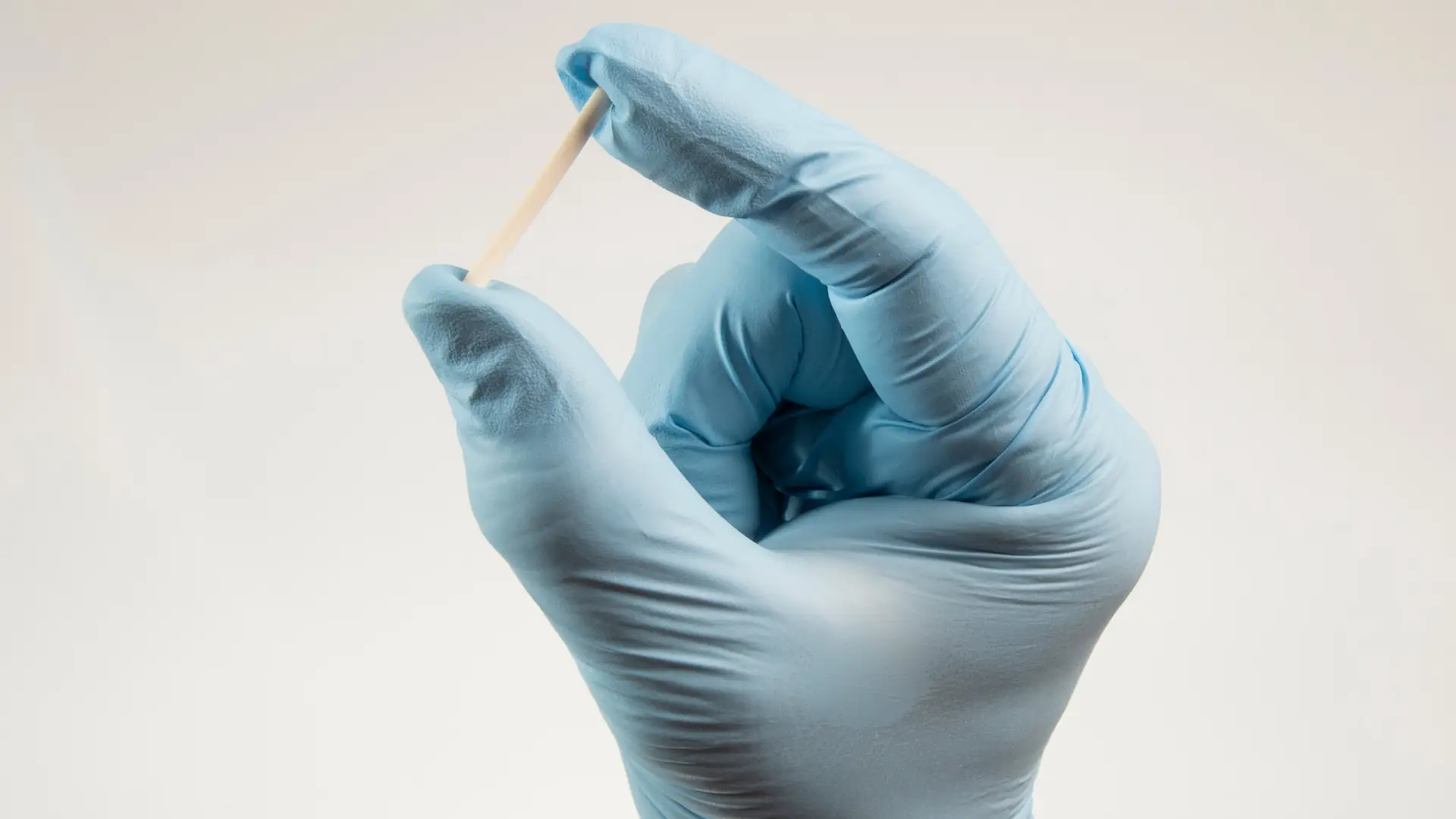
Long-acting reversible contraception, LARC for short, gives you a form of birth control that works quietly in the background, without a daily routine to remember. The IUD (hormonal or non-hormonal) and the contraceptive implant all sit in the LARC category. They're among the most effective options available, they're fully reversible, and each can be started, checked and removed with your GP.
What's different between them is where they go, how long they last, and how they interact with your cycle. Aurora is our women's health team, and IUD and implant procedures are one of the things we do most often. If you've been thinking about a switch, or considering LARC for the first time, we'd rather you came in and asked than tried to figure it out on your own.
You have two options for who performs the procedure: your Aurora GP, or our specialist. A GP referral is required for the specialist path.
Three effective forms of reversible contraception.
- Where it goesInside the uterus
- How longThree to eight years, depending on the type
- How it worksReleases a low-dose progestogen locally in the uterus. Thins the lining and thickens cervical mucus.
- Effect on periodsOften lighter or absent over time
- ReversibilityFertility usually returns quickly after removal
- Where it goesUnder the skin of the upper arm
- How longUp to three years
- How it worksReleases a progestogen that often prevents ovulation and thickens cervical mucus.
- Effect on periodsVaries. Some become lighter or absent, some become irregular
- ReversibilityFertility usually returns quickly after removal. Replacement can nearly always be done on the same day as removal.
- Where it goesInside the uterus
- How longUp to ten years, depending on the type
- How it worksCopper alters the environment inside the uterus to prevent fertilisation. Contains no hormones.
- Effect on periodsPeriods can become heavier or crampier, especially in the first few months
- ReversibilityFertility usually returns quickly after removal
This page describes categories of long-acting reversible contraception rather than any specific brand or medicine. Your GP will discuss the exact device and product options with you at your consultation, and provide the relevant consumer medicine information.
From decision to procedure.

We book a 15-minute pre-consult so we can walk through your history, your questions, and which option is likely to suit you. You don't need to have decided before you come in; part of the appointment is deciding together.
For the implant, we book a 30-minute procedure appointment for insertion, replacement or removal. Please bring the implant with you if you're having one inserted or replaced. If you need a prescription first, speak to your GP at the pre-consult. For an IUD, we set aside a longer appointment slot so there's time to settle both before and after. The insertion itself typically takes around 15 minutes. We use local anaesthetic where appropriate and go through the practical details with you first.
For an IUD, some cramping and light spotting for the first few days is common. For the implant, you might have a small bruise on your arm that settles within a week. If you'd like a review to check things have settled or to talk through any questions that have come up, we can arrange one; it isn't a required step.
IUD and implant, insertion and removal, across all three centres.
GPs who do this regularly, not occasionally.
















Straightforward, Medicare-friendly.
For eligible patients, the initial consultation is bulk-billed. The procedure itself is privately billed, with a Medicare rebate applying to eligible items.
The exact fee and gap payment depend on the clinician you see and the specific procedure booked, since each of our GPs sets their own billing arrangement as an independent practitioner. The device itself is available on the PBS for most patients, with the standard PBS co-payment applying separately. Individual billing details are on each clinician's profile page, and reception confirms the specific fee and expected out-of-pocket when you book.
The questions we hear most.
If your question isn't here, our reception team is a good first stop, and your GP will walk through the specifics at your consultation.
Does it hurt?
Some cramping is normal during and after an IUD insertion. We take the time to talk through what to expect, use local anaesthetic where appropriate, and give you the option of taking simple pain relief beforehand. Most patients describe it as brief discomfort rather than pain, and it usually settles within a day or two. For the implant, the sensation is limited to a small local anaesthetic and a very quick placement.
How soon does it start working?
When protection starts depends on where in your cycle the device or implant is inserted, so your GP will explain the timing for your situation. As a rule, the hormonal IUD should be inserted at least seven days after the start of your period, and the implant no later than five days after the first day of bleeding (or at any time if you're already on the mini-pill, an IUD, or transitioning from progestagen injections). If you've recently given birth, had a miscarriage or termination, we ask you to wait at least six weeks before an IUD insertion. Your GP will confirm whether you need backup contraception in the meantime.
Can I have it removed early if I want to try for a baby?
Yes. Both options are fully reversible. Fertility usually returns quickly after removal, and many women conceive within the first cycle or two. Your GP can also talk you through preconception planning at the same appointment if you'd like.
Can I have an IUD if I've never had a baby?
Yes. IUDs suit most women, whether or not they have had children. Your GP will talk through the specifics with you at your consultation and answer any concerns you have about insertion.
Do I need a referral?
No, you can book directly with any Aurora GP. If you already see a GP outside SMSG and want to keep your usual doctor for general care, you're welcome to book with us just for the procedure.
What if it doesn't suit me?
If you're finding side effects difficult, or the option isn't working the way you hoped, come back and see us. We can review, discuss alternatives, and remove it whenever you decide. That decision is always yours.
Read on to go deeper.
Aurora Women & Babies Health
The whole women's health team, from your first period through menopause.
Women's Health Check
The GP-led women's health check that wraps cervical screening in with the age-appropriate preventive items.
Dr Tao Geng
Aurora GP based at Earlwood and Bangor, IUD-experienced.
Menopause support
Perimenopause and menopause care from doctors who specialise in it.