
Iron infusions in general practice: who they help, and what the day looks like.
Fatigue that never quite lifts is often iron-related. Here's how we work it up, and how the infusion itself is delivered.
Iron deficiency is one of the most common reasons people feel more tired than they think they should. Oral iron works for most people, most of the time, but for the situations where it doesn't, an infusion in general practice is now a straightforward day.
Who benefits from an infusion.
Iron infusions are appropriate when oral iron is not enough, not tolerated, or not fast enough. That commonly includes people with ongoing losses (heavy periods, bowel-related losses), people who've tried tablets and had side effects, pregnant patients where levels need to come up quickly, and patients with malabsorption where the gut doesn't take up iron efficiently from tablets.
The decision to move to an infusion is made together, based on the blood picture, the reason for the deficiency, and how you've responded so far. Reception can book you in with a GP who does infusions in-house; you don't need a referral from anyone else.
The workup before the infusion.
Before an infusion is arranged, we run a full iron studies panel and, depending on your history, a broader blood workup. The point is not just to confirm the deficiency but to understand what's causing it. An infusion refills the tank; it doesn't stop the leak. Where a cause needs further investigation (for example, a colonoscopy for a middle-aged patient with unexplained iron loss), we'll organise that in parallel.
What the day looks like.
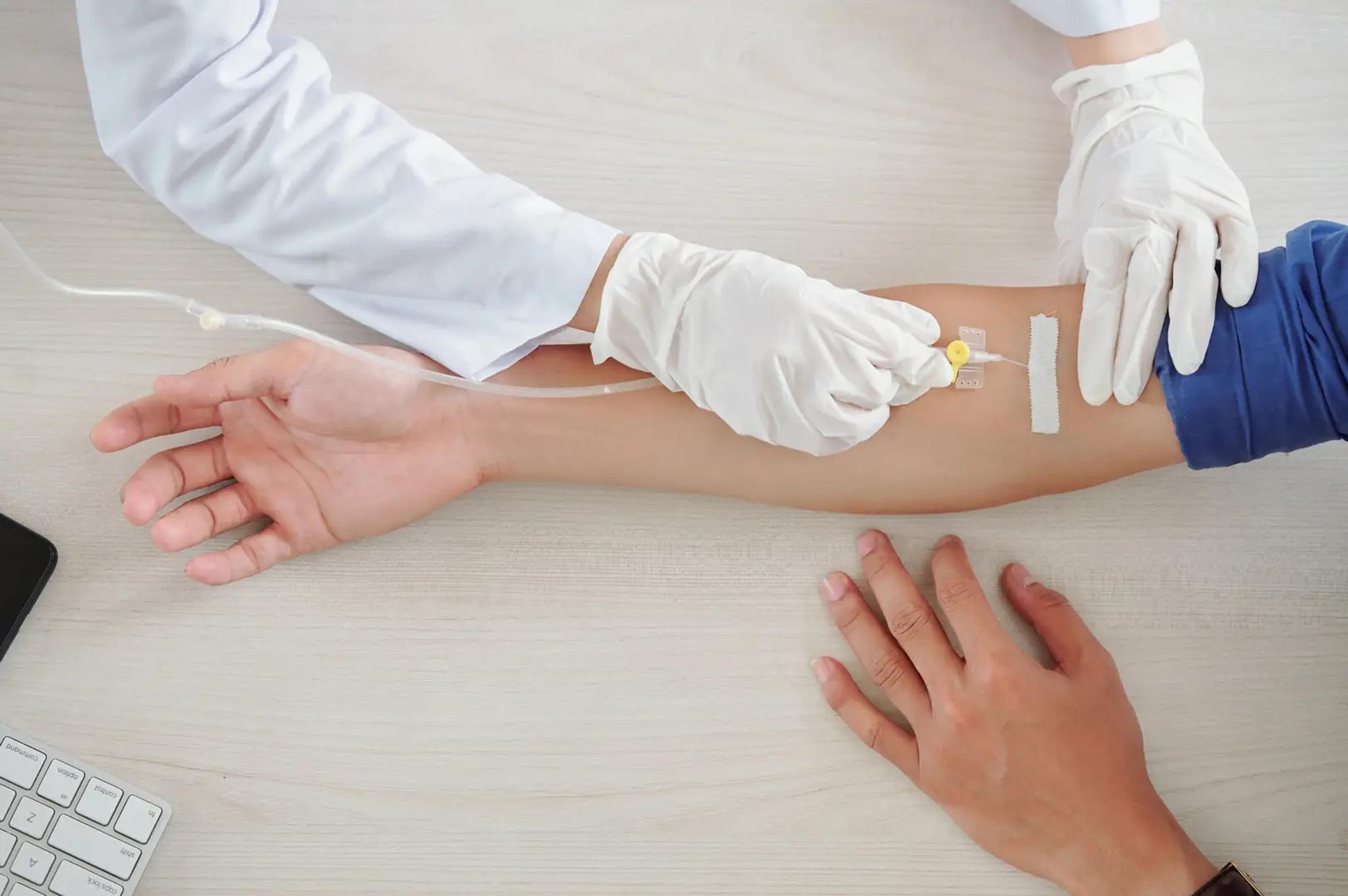
The infusion itself is done in our treatment room, sitting in a recliner, and takes about 20 to 30 minutes from cannula in to cannula out. You'll be observed for a short period afterwards, so plan on being in the centre for roughly an hour in total. You can eat and drink normally before and after. Most people drive themselves home; if you'd feel more comfortable with a lift, that's fine too.
- Wear something with sleeves you can push up.
- Bring something to read; the infusion runs quietly.
- Tell us in advance if you've had a reaction to iron infusion previously.
- Let us know if you're pregnant or trying to conceive.
After the infusion.
Some people feel slightly flat for a day or two, which is normal. Muscle aches or a mild headache can occur and settle quickly. A short-lived rash at the infusion site is uncommon but not unusual. Serious reactions are rare, and we screen for risk factors before booking.
Iron levels improve over weeks, not days. We usually recheck bloods in 6 to 8 weeks to confirm the response and plan the next step. In many people, one infusion is enough for the year. In others, particularly where losses continue, we set a review cadence together.